
The brief
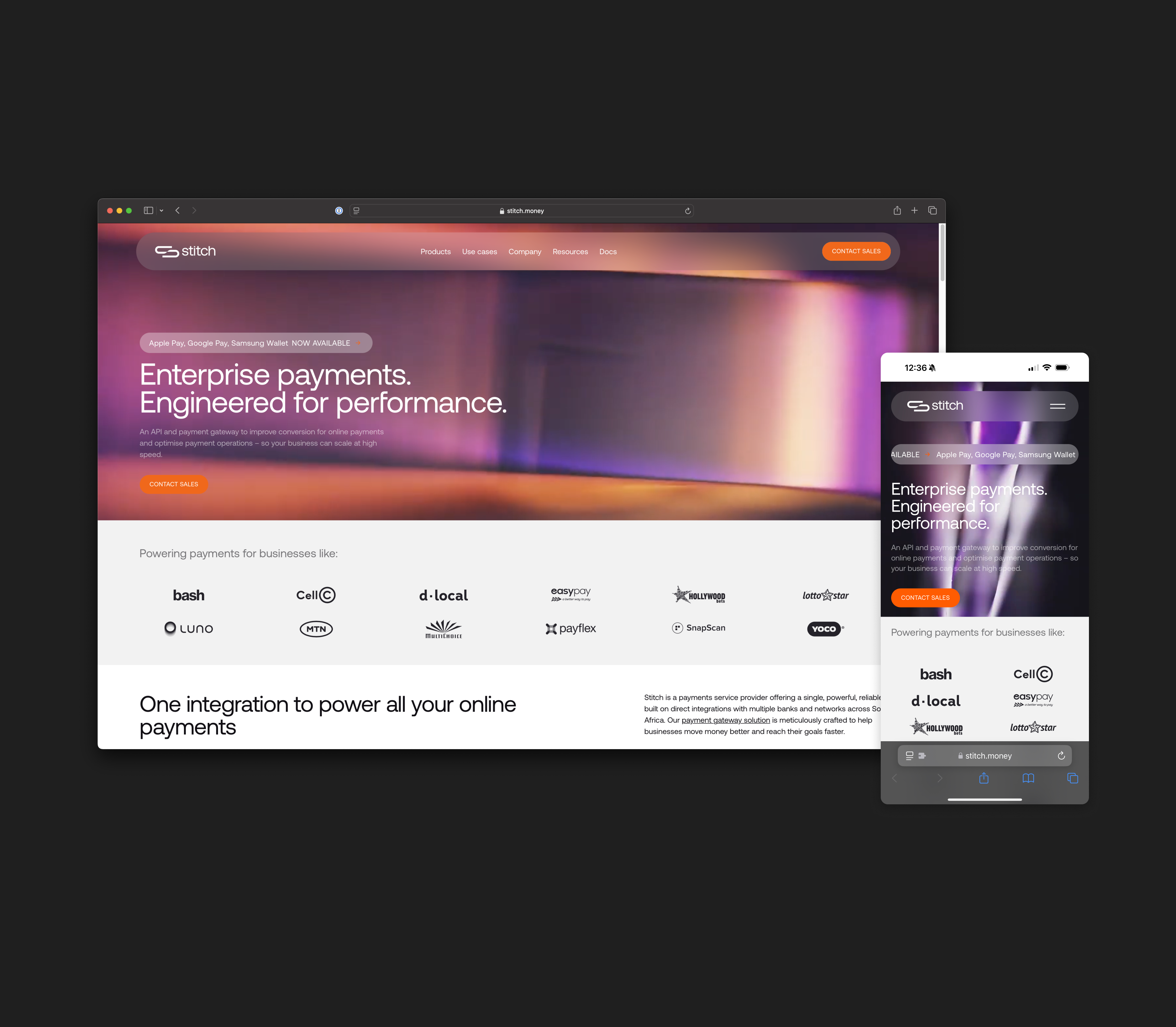
Stitch is a payments service provider that offers a single, powerful, reliable API, built on direct integrations with multiple banks and networks, as well as a payment gateway. Its website is how South African businesses learn what Stitch offers, from online and in-person payments to fraud prevention and developer documentation.
Stitch's site was on Strapi. Milk Moon Studio was tasked with migrating it to Webflow and rebuilding it on a flexible component framework, so the in-house team could spin up new pages by dragging components onto a page.
What we built
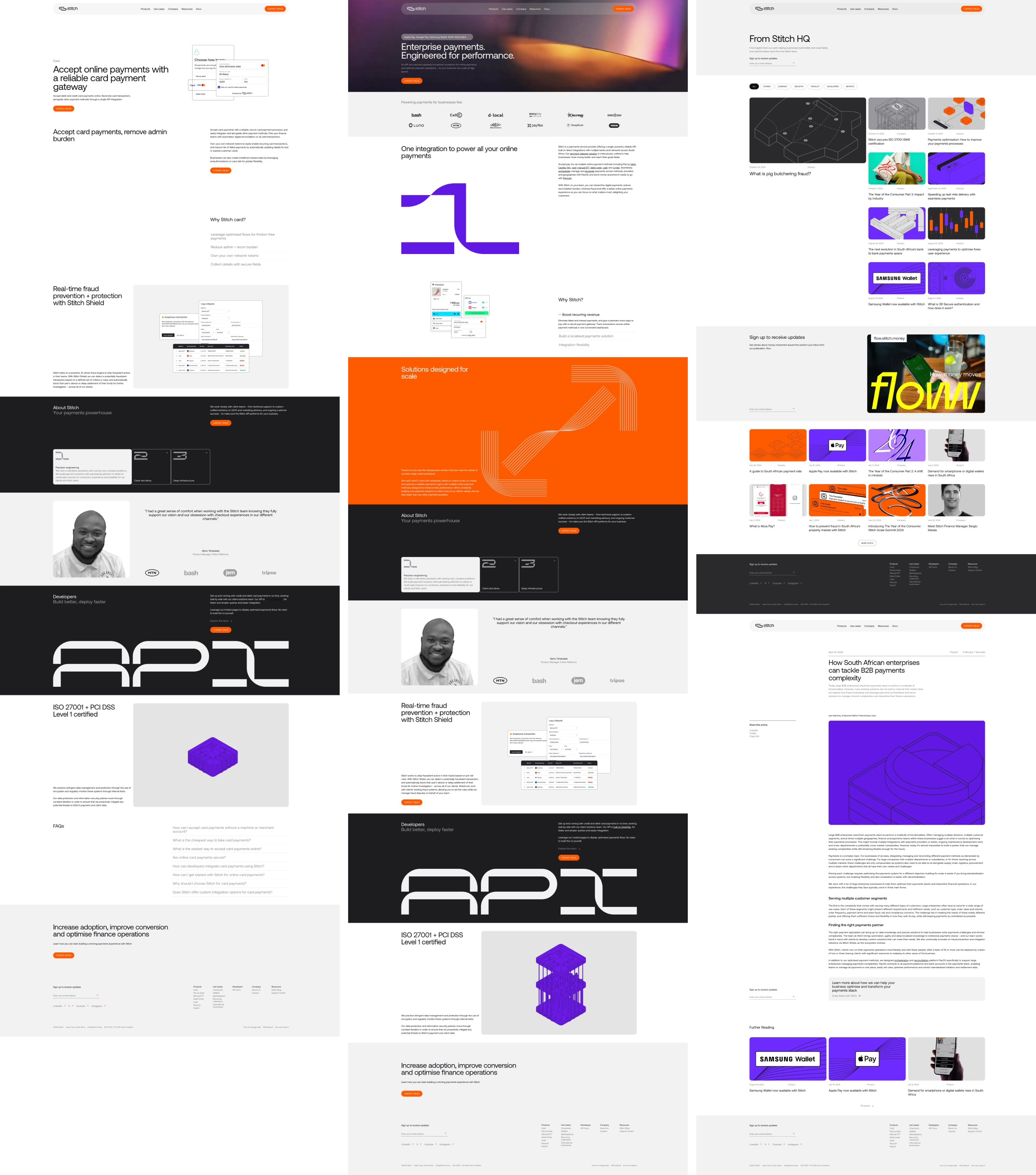
The site is built from a few framework components with content slots, plus a large library of other components that drag straight into those slots. The pages above show the result: a home page with the headline "Enterprise payments. Engineered for performance." and a row of client logos, product pages such as card payments, a blog hub called Stitch HQ, and article pages.
Components and content slots
Each framework component holds a slot, and any other component can be dropped into it. That keeps the structure consistent while leaving the content free to change, so one page can mix and match sections however it needs to.
Building pages by dragging
So the in-house team can create new pages themselves, dragging components in and mixing them as they see fit.
Our role
We handled the migration from Strapi to Webflow and the component framework behind it. Webflow is the platform we use for most of our work (here is why, in 10 reasons Webflow works for Milk Moon), and a component-based build suits a team that wants to build its own pages. You can see more of this kind of work under web development projects and component-based builds, or read about what we do. The live site is at stitch.money.